

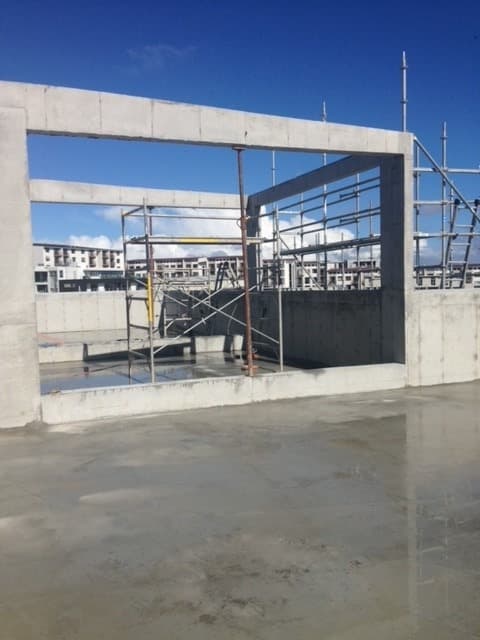
Design and Build for Concrete Construction in NZ: What You Need to Know
Design and build (D&B) delivery has become increasingly common in NZ commercial and residential concrete construction. When it works well, it is faster, cheaper, and less stressful than traditional separate-contract delivery. Here is what you need to know before choosing it.
What Design and Build Actually Means
In traditional project delivery, the client engages an architect or engineer to produce a full set of drawings and specifications, then goes to market with those documents to get construction prices. The designer and the builder are separate parties with separate contracts, and the client sits in the middle managing them both.
Design and build flips that model. A single contractor takes responsibility for both the design and the construction under one contract. You brief them on what you want — the function, the budget, the timeline, any non-negotiables — and they take it from there. They engage or employ the engineers, manage the consent process, and deliver a finished building.
For concrete construction specifically, this matters because concrete is an engineered material. The structural design, the mix specification, the formwork system, and the pour sequence are all deeply interconnected. A contractor who understands how a building will actually be built can make design decisions that reduce cost and risk in ways a standalone design consultant often cannot.
How Design and Build Works in Practice
A typical D&B concrete project moves through roughly five stages:
- →Client brief.You define what you need — site, use, rough floor area, budget range, programme constraints, and any design preferences. The D&B contractor uses this to produce a preliminary concept and an indicative price.
- →Developed design and consent. Once you accept the concept and price framework, the contractor develops the detailed design, engages their structural and services engineers, and manages the building consent application with council.
- →Construction. Work begins, often while consenting is being finalised on non-structural elements. The contractor controls the pour schedule, inspections, and subcontractors.
- →Fit-out and completion. Depending on the scope, the contractor may also handle internal fit-out, or hand over the weathertight shell for the client to fit out separately.
- →Code compliance and handover. The contractor obtains the code compliance certificate (CCC) from council and hands over the completed building with all documentation.
The key difference from traditional delivery is that you are not managing a designer and a builder in parallel. There is one contract, one point of contact, and one party responsible when things do not go to plan.
The Genuine Benefits of Design and Build
D&B has real advantages for the right project. These are not marketing claims — they are structural features of the delivery model.
- →Single point of accountability.In separate-contract delivery, disputes between designer and builder about whose fault a problem is can leave the client funding repairs while liability is argued. With D&B, the contractor owns the design decisions and the construction outcomes.
- →Faster delivery. Because design and construction can overlap, and because there is no separate tender process once concept is agreed, programmes are typically shorter. For commercial builds on tight timelines this is often the deciding factor.
- →Buildability input from day one. When the contractor is also doing the design, they will not specify a structural detail that is expensive or slow to form and pour. Buildability gets baked in rather than value-engineered out after tender.
- →Fewer variations.A well-run D&B contract locks scope early and keeps it locked. The contractor has no incentive to under-price a tender and recover margin through variations, because they set their own price from the start.
- →Simpler client experience.For owner-operators or investors who do not have project management experience, D&B significantly reduces the coordination load. One relationship to manage rather than three or four.
"The contractor owns the design decisions and the construction outcomes — there is no gap between them for liability disputes to fall into."
The Genuine Risks You Should Know About
D&B is not the right model for every project. The same features that create its advantages also create specific risks that clients need to understand and manage.
- →Less design independence.In traditional delivery, your architect or engineer is working for you. In D&B, the designer is employed or subcontracted by the contractor. In most cases this is fine, but if there is a dispute about whether a design decision serves you or the contractor's margin, you do not have an independent professional in your corner by default. Some clients appoint an owner’s engineer to review design outputs — this is worth doing on larger projects.
- →Conflict of interest on cost decisions. When the same party doing the design is also managing construction cost, there is inherent tension. A contractor under cost pressure may make specification decisions that reduce their exposure but do not serve the long-term performance of the building. This is manageable with good contracts and a capable client, but it is real.
- →Harder to benchmark price.Because you are not going to market with a set of tender documents, you have less ability to compare apples with apples between contractors. The scope is inherently somewhat flexible at concept stage, and two contractors may be pricing different buildings. Market testing is harder, and you need to trust that the contractor’s price is fair.
- →Scope creep risk cuts both ways. If scope is not tightly defined at contract, you may find items you assumed were included get treated as variations. Clear scope schedules and a robust variation protocol are non-negotiable.
When Design and Build Makes Sense for Concrete
D&B suits certain project types better than others. For concrete construction, the model works particularly well in these scenarios:
- →Industrial and agricultural buildings.Warehouses, cool stores, processing facilities, and farm buildings typically have functional requirements rather than complex design intent. D&B contractors who specialise in these building types know the efficient structural solutions, and there is no need for the design independence that a bespoke architectural project warrants.
- →Repeated building programmes.If you are developing multiple sites with a similar building type — a franchise operator building out sites, a developer with a repeating residential product — D&B with a contractor who understands your brief gets faster and cheaper over time. Consent documents can be reused, formwork gets optimised, crews become efficient on your specific building.
- →Time-critical commercial builds.When a business needs to be operating in a building by a specific date, the overlapping design and construction phases in D&B can shave two to four months off a typical programme compared with traditional delivery.
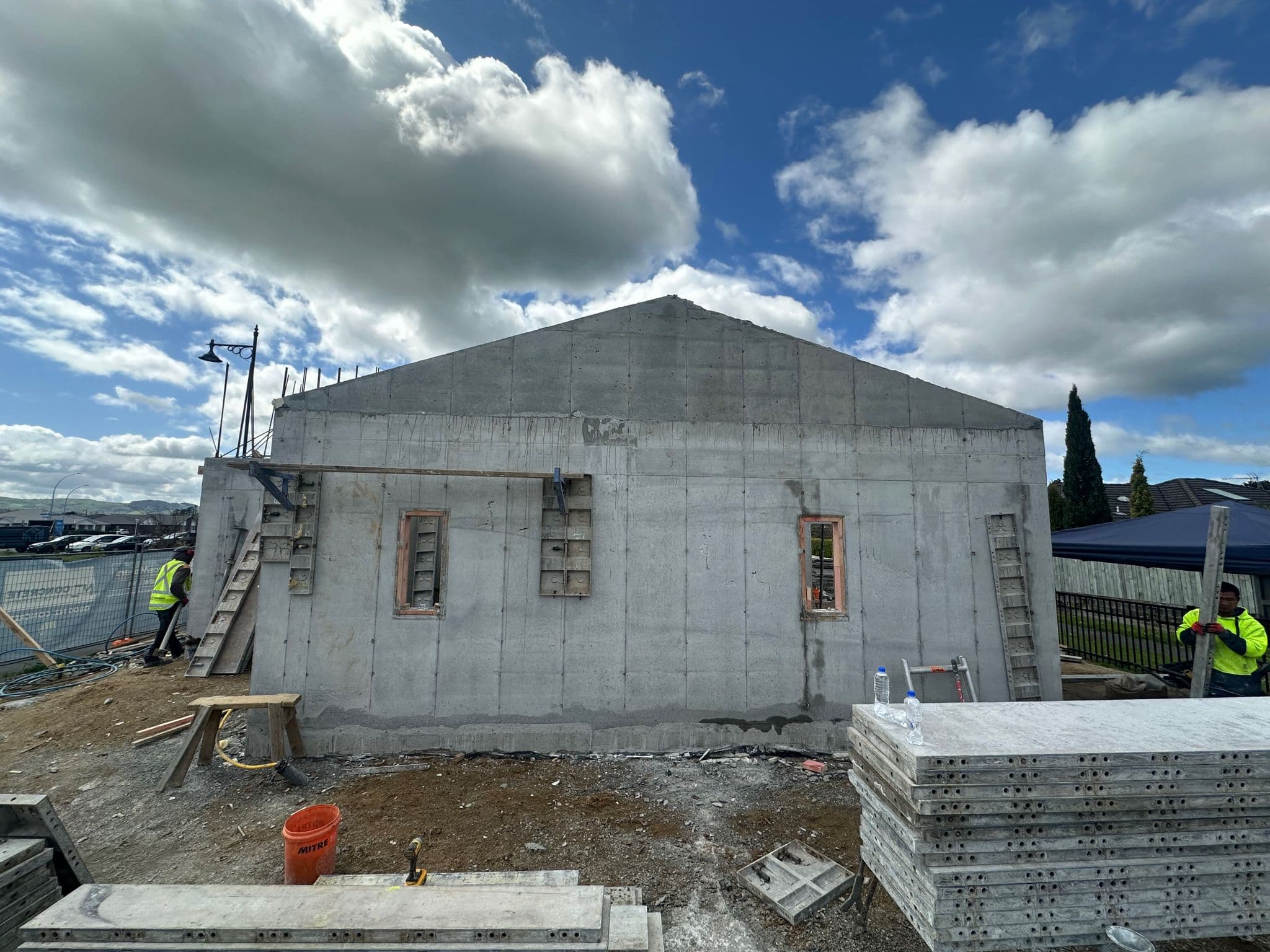
- →Concrete home builds with a system approach. Systems like Thermalcast are designed specifically for integrated delivery — the formwork system, the structural design, and the build methodology are all developed together, so a D&B approach extracts the full benefit of the system rather than adapting it to a separately-designed house.
When Design and Build Does Not Make Sense
There are project types where separate-contract delivery is genuinely better, and it is worth being honest about that.
Complex architectural projects where design intent is a primary value — a flagship retail fitout, a publicly visible civic building, a home where the architectural character is the point — are better served by an independent architect who works for the client and can hold the design vision through construction. When a contractor controls the design, the gravitational pull is always toward the most buildable and most profitable solution, not necessarily the best architectural outcome.
Heritage work, adaptive reuse, and complex remediation projects also benefit from independent specialists. These projects require investigative and diagnostic design work that is best done by consultants who are not simultaneously managing construction risk.
Finally, if you are not in a hurry and want to extract maximum price competition from the market, a traditional tendered contract with a full set of documents gives you more control over benchmarking. The trade-off is time and management overhead.
Rule of thumb: if function dominates form, D&B is usually the right call. If the architecture itself is the product, keep design independent.
What to Look for in a Concrete D&B Contractor in NZ
Not all contractors who offer design and build have the in-house capability to actually deliver it well. Here is what to look for:
- →In-house engineering.The best D&B concrete contractors either employ structural engineers or have long-standing relationships with engineering firms they work with regularly. Casual subcontracting of engineering design introduces the same coordination gaps as separate-contract delivery.
- →Consenting experience. Building consent with territorial authorities in New Zealand takes time and expertise. A contractor who does not have established relationships and processes with councils — especially for concrete construction, which requires specific inspection sign-offs — will lose programme time on consent delays.
- →Relevant track record. Ask for examples of similar projects — similar building type, similar scale, similar programme requirements. A contractor who has built ten warehouses has learned lessons that a contractor building their first one has not. Ask for references from recent clients, not just a portfolio of photos.
- →Financial stability.Because D&B involves the contractor carrying design risk through to construction, contractor financial health matters more than in a traditional contract where scope is fixed before work starts. Check that the contractor is licensed under the Licensed Building Practitioners scheme and has adequate insurance.
- →Transparent pricing methodology.A good D&B contractor should be able to explain how they have arrived at their price — what assumptions they have made, where contingency sits, and what would trigger a variation. Opaque pricing at concept stage is a red flag.
Residential vs Commercial Concrete Builds: How the Process Differs
The D&B model applies to both residential concrete homes and commercial concrete builds, but the process differs in important ways.
In residential concrete construction, the client is typically the end occupant. This means design decisions about layout, finishes, and livability matter personally, and the brief tends to evolve through the design phase as the client sees options and responds to them. D&B for residential concrete works best when the contractor has a well-developed system — like an insulated concrete formwork approach — that gives the client a clear framework for decisions rather than an open-ended brief.
Commercial D&B is typically more brief-driven and less emotionally iterative. The client usually has a clear functional specification — square metres, loading capacity, services requirements — and is more focused on cost and programme than on design decisions. The design process is faster, and the variation risk is lower because scope is more objectively definable.
The consenting process also differs. Residential consents go through local territorial authorities and typically involve residential-specific inspectors. Commercial consents for larger buildings may involve independent qualified persons (IQPs), peer review, and more complex sign-off requirements for structural, fire, and services elements. A contractor experienced in commercial concrete construction will have this process mapped out.
Key Contract Clauses to Get Right
D&B contracts require specific provisions that are not always present in standard construction contracts. These are the clauses that matter most:
- →Scope definition and design development protocol.The contract must clearly define what is included in the design scope, how design development is approved by the client, and what happens if the developed design differs from the concept. A vague scope schedule is the single biggest source of disputes in D&B contracts.
- →Variation management. Specify who can instruct variations, the process for pricing them before work proceeds, and a cap or protocol for cumulative variation value. Client-initiated variations are normal; contractor-initiated variations (because something was not in their design scope) should be rare and subject to scrutiny.
- →Payment milestones tied to deliverables. Avoid milestone payments that are based purely on time elapsed. Tie payments to defined deliverables — consent lodgment, consent grant, foundation completion, structure to roof height, weathertight, CCC — so the contractor has an incentive to achieve each stage.
- →Design documentation ownership. Specify that the client owns the final consent drawings and engineering calculations. If the contractor is replaced mid-project (rare but it happens), you need to be able to use those documents to complete the build.
- →Defects liability period. Because the contractor is responsible for design and construction, a standard defects liability period (12 months is typical in NZ) should cover design defects as well as construction defects. Ensure the contract is explicit about this.
The NZS 3910 contract is commonly used for construction in New Zealand, but it is primarily written for traditional separate-contract delivery. If you are using a D&B model, either adapt NZS 3910 with specific D&B amendments or use a purpose-built D&B contract. Get legal advice on the contract before signing — a modest investment that protects a significant one.
NZ Concrete Group
Family-owned concrete construction specialists based in Hamilton, Waikato. Over 30 years building concrete homes and commercial structures across New Zealand and Australia.
Looking for an Integrated Concrete Build?
NZ Concrete Group works with clients on design-build projects from brief to handover. Talk to us about your project.