

Concrete Homes NZ: Your Complete 2026 Guide
Everything you need to know about building a concrete home in New Zealand — how they're built, what they cost, who builds them, and whether one is right for your project.
Concrete homes in New Zealand occupy a niche that is growing fast. Once considered an unusual choice for residential construction, concrete homes now represent some of the most sought-after properties in the country — and with good reason. They are warmer, stronger, quieter, and lower-maintenance than the timber-framed homes that dominate the NZ market.
But the term "concrete home" covers a wide range of construction methods, price points, and outcomes. This guide breaks down everything you need to know — from build systems and costs through to finding the right builder and understanding the NZ-specific context that makes concrete an especially compelling choice here.
In this guide
1. What Is a Concrete Home?
A concrete home is a residential building whose primary structural walls — and typically its floor slab — are made from concrete rather than timber. This is distinct from a brick-veneer home, where a brick or concrete block skin is applied to a timber frame: in a true concrete home, the concrete is the structure.
The concrete walls carry the loads of the roof and upper floors, provide seismic resistance, and act as the primary thermal barrier between inside and outside. The result is a fundamentally different building — one that behaves very differently from a timber-framed home in terms of thermal performance, acoustics, durability, and structural behaviour.
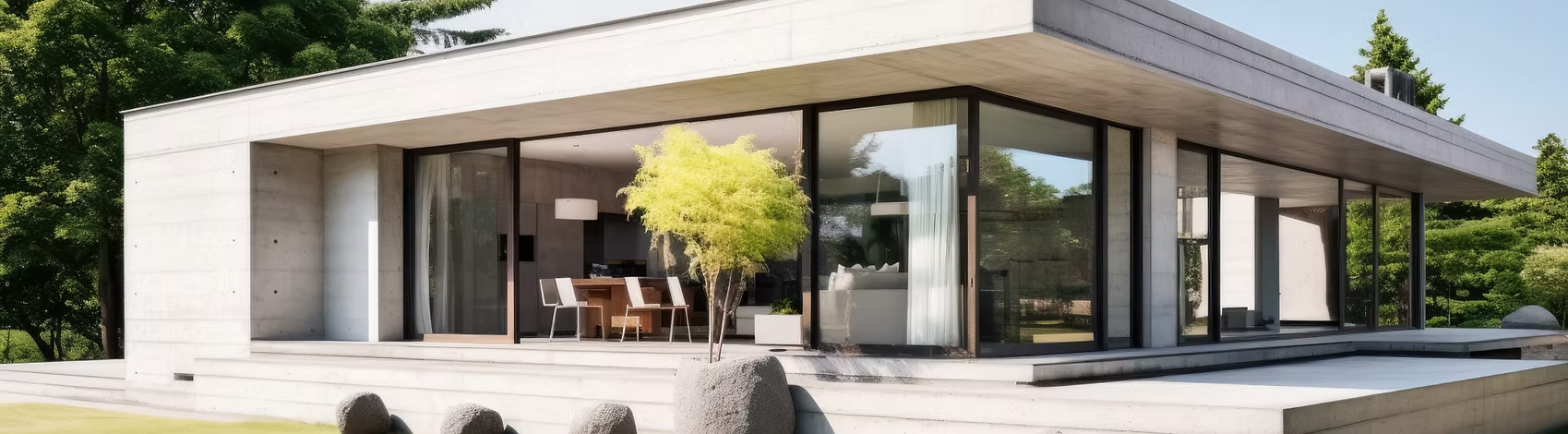
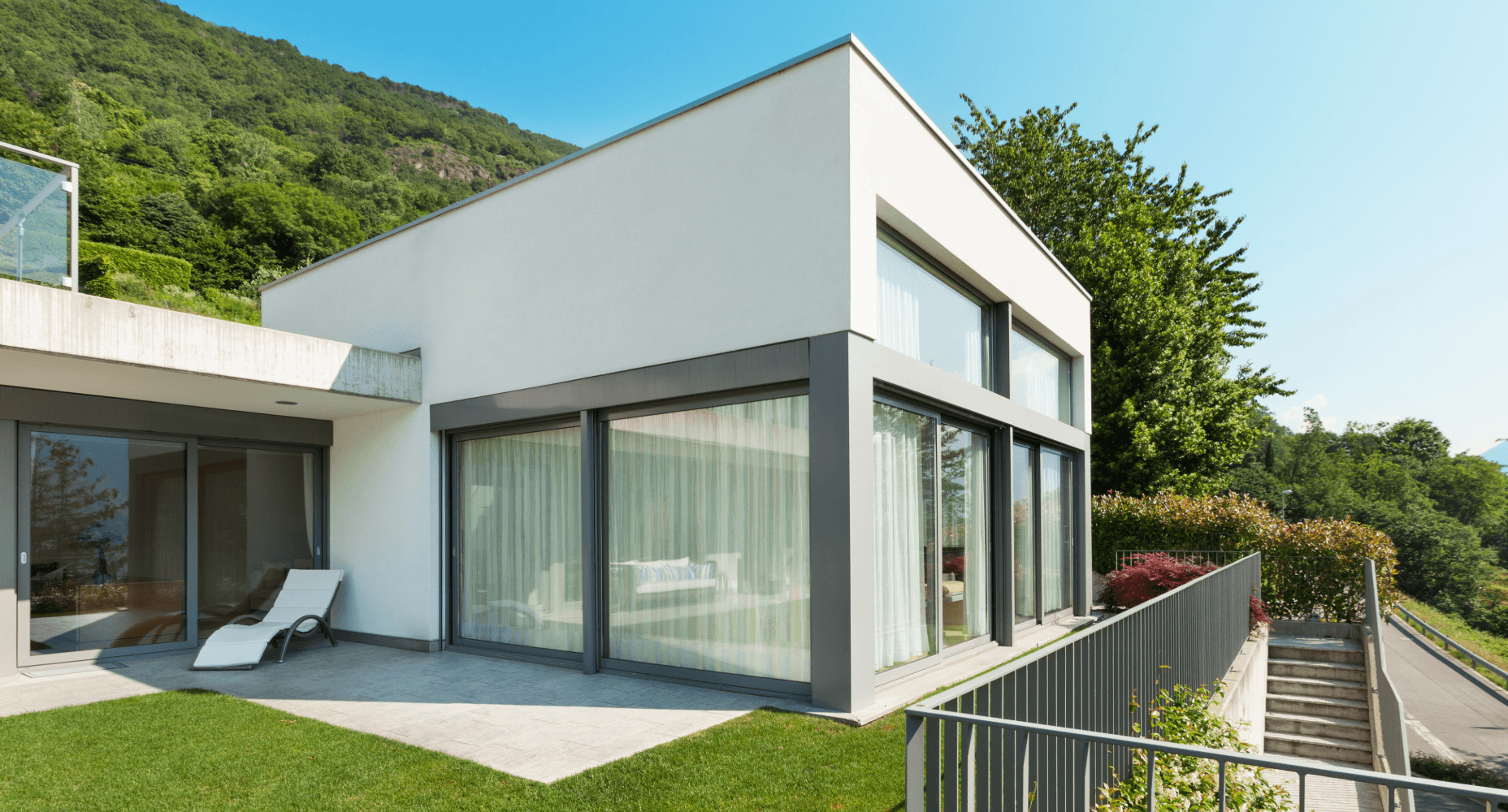
Concrete homes can be designed to look identical to any other high- end New Zealand home — rendered finishes, vertical cedar cladding, large glazing, and modern architectural detail are all fully compatible with a concrete structural system. From the outside, most people would never know.
2. The Main Build Systems Used in NZ
Several concrete building systems are used for residential construction in New Zealand. They share the same structural material but differ significantly in how that concrete is placed and how insulation is integrated.
Insulated Concrete Forms (ICF)
ICF is the dominant system for new residential concrete homes in New Zealand and much of the world. Expanded polystyrene (EPS) foam blocks or panels are stacked to form the wall shape, steel reinforcing is placed inside, and concrete is poured into the cavity. The foam remains in place as permanent integrated insulation on both sides of the concrete core.
The result is a wall that is structural concrete at its core, insulated on both faces, and capable of achieving very high thermal and acoustic performance without any additional wall build-up. ICF homes are built in-situ — on your site — which allows for any floor plan and significant architectural flexibility.
NZ Concrete Group's ThermaCast system is an in-situ ICF method developed and refined over 30+ years of NZ concrete construction. It is designed to suit the NZ climate, NZ ground conditions, and NZ seismic requirements.
Tilt Slab / Precast Panel
Tilt slab construction involves casting large concrete wall panels flat on the floor slab, then tilting them up into position with a crane. It is widely used in commercial construction and, to a lesser extent, in residential buildings — particularly large homes or those where speed of erection is important.
Precast is similar but the panels are manufactured off-site (at a factory or a dedicated casting area) and transported to the site. Both systems produce good structural performance but typically require additional insulation to be added separately, and the wall thicknesses and panel sizes constrain architectural flexibility more than an ICF system.
Concrete Masonry Units (CMU / Block)
Concrete block (also called concrete masonry units or CMU) is a traditional residential concrete system where hollow blocks are laid in courses, reinforced, and grouted. It is structural and durable, but block homes are relatively rare in NZ residential construction today — the ICF system offers superior thermal performance with less labour for new builds.
3. Why Concrete Suits New Zealand Specifically
New Zealand's construction environment is unusually well-suited to concrete homes — for reasons that don't apply in the same way in most other countries.
Seismic Risk
NZ sits on the boundary between the Pacific and Indo-Australian tectonic plates. The country has one of the highest rates of seismic activity in the world. Every region has a seismic hazard factor, and every home must be designed to meet it. Reinforced concrete construction provides a level of structural integrity under seismic loading that timber framing — which relies on many individual connections — cannot match in the same way.
Cold, Damp Climate
Large parts of NZ experience cold winters and high humidity. New Zealand has some of the highest rates of cold-related illness in the OECD, partly attributable to poorly performing housing stock. The thermal performance delivered by an ICF concrete home is a meaningful response to this — one that genuinely changes the experience of living in the home.
Coastal Environment
A large proportion of NZ's population lives within a few kilometres of the coast. Salt air, UV exposure, and wind-driven rain are hard on timber and paint systems. Concrete handles the coastal environment better — it does not rust, rot, or require the same level of surface maintenance as a timber-clad home on a coastal site.
4. Concrete vs Timber Frame: An Honest Comparison
| Factor | Concrete | Timber Frame |
|---|---|---|
| Build cost | Higher (typically $3,500–$5,500/m²+) | Lower (typically $2,800–$4,500/m²+) |
| Thermal performance | Excellent — integrated insulation + thermal mass | Good with insulation, but no thermal mass |
| Seismic resilience | Excellent — monolithic reinforced structure | Good if well-braced; relies on connections |
| Durability | 100+ years design life | 25–50 years practical lifespan |
| Maintenance | Very low — no repainting, no borer | Moderate — regular maintenance required |
| Acoustic performance | Excellent — high mass = high STC ratings | Moderate — improves with acoustic insulation |
| Weathertight risk | Low — concrete is not susceptible to rot | Higher — leaky building risk if details fail |
| Architectural flexibility | High — any floor plan achievable | High — very flexible |
| Resale value | Premium — strong buyer appetite | Market-standard to good |
Cost ranges are indicative for 2026 and vary significantly by location, design complexity, and specification.
5. What Does a Concrete Home Cost in NZ?
The build cost of a concrete home in New Zealand is typically higher than an equivalent timber-framed home. The premium varies by build system, design complexity, and region, but as a rough guide in 2026:
- →Entry-level concrete home: $3,500–$4,200/m² (simple design, standard specification)
- →Mid-range: $4,200–$5,500/m² (contemporary design, good specification)
- →Premium: $5,500+/m² (complex design, high specification, difficult site)
These figures are for the build cost only and exclude land, consents, professional fees, and landscaping. Regional variation is significant — Hamilton and Waikato typically come in lower than Auckland, and Queenstown and Wellington carry a premium due to logistics and local labour costs.
Total cost of ownership over 30 years frequently tells a different story. When avoided maintenance, lower energy bills, and higher resale value are factored in, the gap between concrete and timber narrows considerably — and in some scenarios, reverses.
See our detailed 2026 concrete home cost guide →
6. The Build Process: What to Expect
A concrete home typically moves through the following stages. The specific timeline depends on the design, consent process, and contractor availability, but allow 12–18 months from design to handover for a standard residential build.
- 1
Design and engineering
A concrete home requires close collaboration between architect and structural engineer from the outset. Wall thicknesses, opening locations, and load paths need to be coordinated early. Budget 2–4 months for this phase.
- 2
Building consent
Councils typically take 20 working days for a standard residential consent. Complex sites or earthquake-prone areas may take longer. Allow 4–8 weeks.
- 3
Site preparation and foundations
The concrete slab and foundations are established first. On challenging sites (peat, clay, steep slopes), this stage may involve more work and cost than a simple site.
- 4
Wall construction
For an ICF build, the foam formwork is assembled, reinforcing placed, and concrete poured and vibrated. The concrete walls are typically complete in 2–6 weeks depending on the size of the home.
- 5
Roof structure and weathertight
Roof framing, roofing, and external cladding follow. The concrete structure allows the building to be made weathertight quickly.
- 6
Internal fit-out
Services (electrical, plumbing, HVAC), insulation, linings, joinery, and finishes are completed over 3–6 months.
- 7
Handover
A code compliance certificate is issued once inspections are passed. The home is handed over with all consented work completed.
7. Finding the Right Concrete Home Builder in NZ
Not every builder who can pour a driveway can build a concrete home. ICF construction, in particular, requires specific experience with the build system, an understanding of how to achieve the thermal and structural outcomes promised, and the project management capability to coordinate the concrete placement, reinforcing, and building envelope correctly.
When evaluating concrete home builders, look for:
- ✓Demonstrated track record of completed concrete homes (not just commercial concrete work)
- ✓Experience with the specific build system (ICF, tilt slab, or block)
- ✓In-house concrete expertise rather than subcontracting the core structural work
- ✓An understanding of NZ seismic design requirements and Building Code compliance
- ✓References from past clients who have lived in a completed concrete home
- ✓Transparency on pricing — concrete home costs vary significantly by specification
NZ Concrete Group has been building concrete homes in New Zealand since 1994. Our team includes the concrete specialists, the structural knowledge, and the track record of completed residential projects. We build across New Zealand from our Waikato base.
8. Frequently Asked Questions
How long does it take to build a concrete home in NZ?
Allow 12–18 months from the start of design to handover for a standard residential concrete home. The consent process and design phase take 4–6 months; the physical build typically takes 6–12 months depending on complexity.
Are concrete homes cold?
Modern ICF concrete homes are warmer and more comfortable than most timber-framed homes. The integrated insulation and thermal mass create a stable indoor temperature that is dramatically better than an uninsulated concrete or masonry home. The old idea of concrete homes being cold applies to uninsulated block or slab construction — not to modern ICF builds.
Can concrete homes be designed to look like a normal NZ home?
Yes. The structural concrete walls are hidden behind internal linings and external finishes, just like a timber-framed home. Rendered finishes, weatherboard cladding, vertical timber, or metal cladding are all compatible. Most concrete homes are visually indistinguishable from high-end timber-framed homes.
Do concrete homes need special insurance?
Concrete homes can be insured through standard NZ residential insurers. Some insurers offer favourable rates due to the non-combustible structure and lower weathertight risk. It's worth getting quotes from multiple insurers and disclosing the construction type accurately.
Are there councils that are more or less easy to deal with for concrete homes?
Concrete homes are a consented construction type like any other. All major NZ councils routinely consent concrete residential buildings. Your engineer's documentation needs to clearly demonstrate compliance with the Building Code, particularly the structural and thermal performance provisions — but this is standard practice for any reputable concrete construction team.
Is a concrete home harder to sell than a timber-framed home?
Not in practice. In fact, concrete homes occupy the premium segment and attract buyers who actively seek them out. In markets where buyer awareness is high — Auckland, Wellington, Christchurch — a well-built concrete home commands a premium at resale. The pool of buyers may be slightly narrower, but they are prepared to pay for what they're getting.
NZ Concrete Group
Family-owned concrete construction specialists based in Hamilton, Waikato. Over 30 years building concrete homes and commercial structures across New Zealand and Australia.
Talk to NZ's Concrete Home Specialists
Get in touch with our team to discuss your site, your design ideas, and what a concrete home would cost for your specific project.