

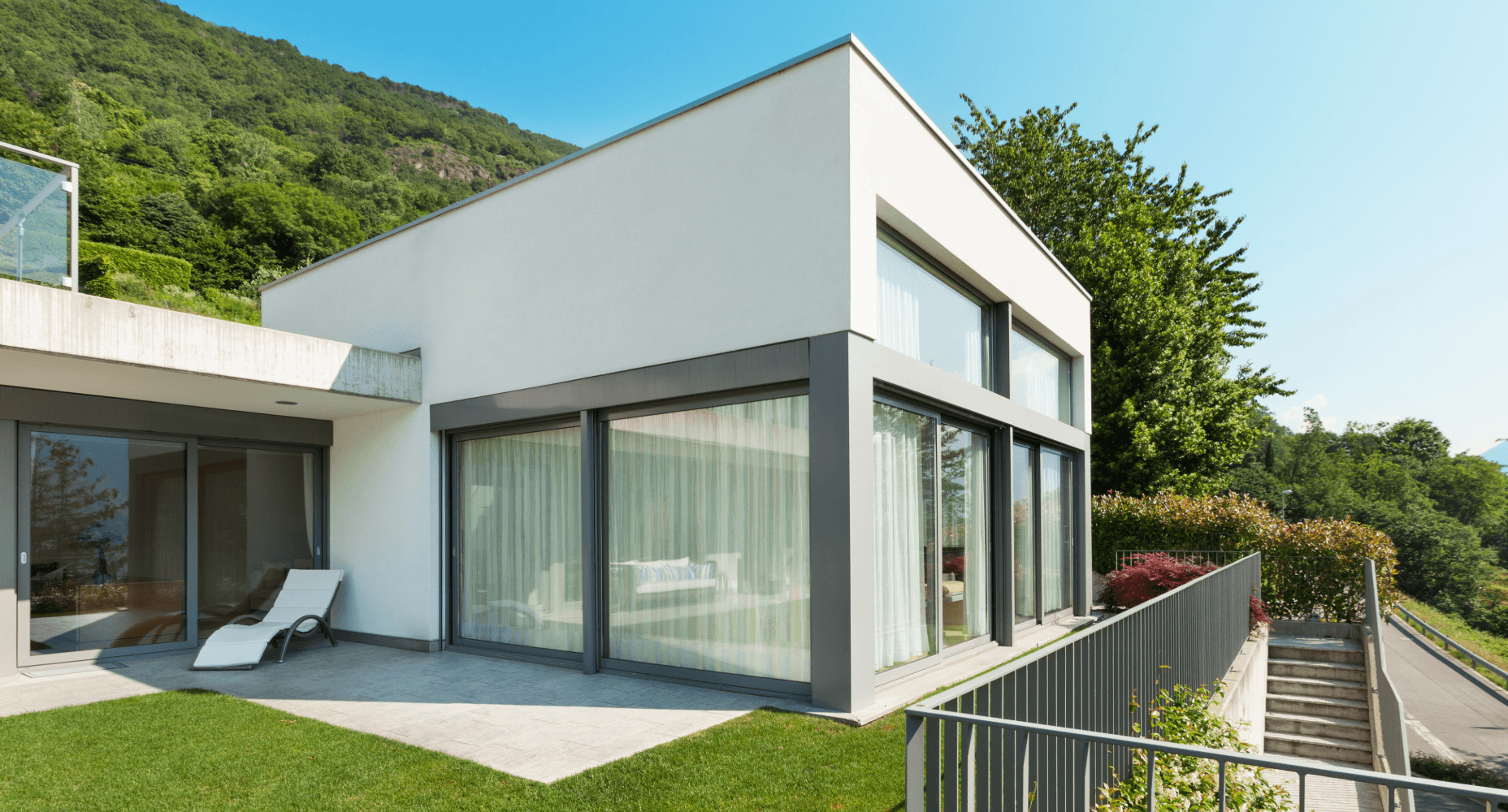
Benefits of Building a Concrete Home in New Zealand
More New Zealand homeowners are choosing concrete over timber frame. Here's what makes concrete homes worth the investment — and why the advantages are even more pronounced in the NZ context.
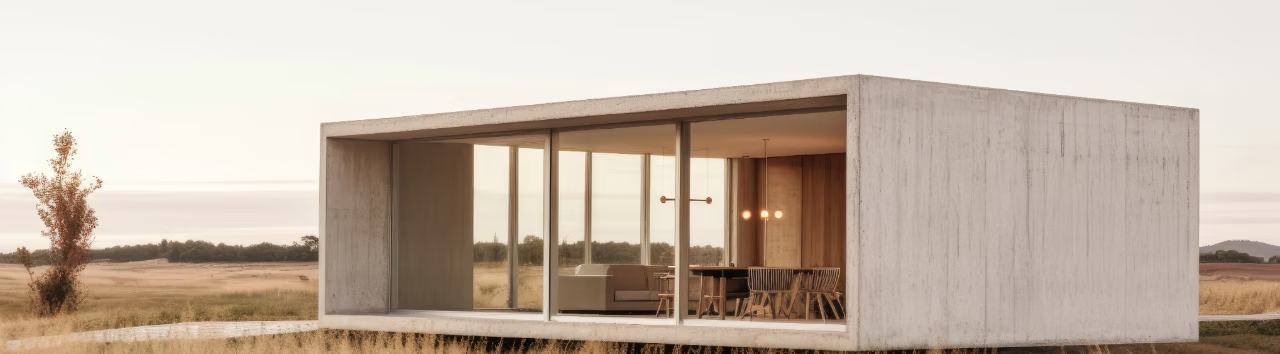
Timber frame has dominated New Zealand residential construction for generations — but the case for concrete is getting harder to ignore. Rising energy costs, increasing awareness of seismic risk, and a growing appetite for low-maintenance homes are pushing more NZ homeowners to reconsider what their house is actually made of.
This isn't about novelty. Concrete homes have been built in New Zealand for decades. What has changed is the build system — modern insulated concrete construction eliminates the old objections about cold, hard concrete while delivering performance that timber frame simply cannot match.
Here are the eight most significant benefits of building a concrete home in New Zealand, and why each one matters in the NZ context specifically.
1. Thermal Performance That Matches the NZ Climate
New Zealand's reputation for mild weather doesn't tell the full story. Much of the country — including Hamilton, Wellington, Christchurch, and Queenstown — experiences genuinely cold winters. Roughly one third of NZ households cannot adequately heat their homes, and cold, damp housing is a documented public health issue.
Modern concrete homes use an insulated concrete form (ICF) system that combines structural concrete with a continuous layer of rigid insulation on both sides of the wall. This creates a thermal envelope that far exceeds the minimum NZ Building Code requirements.
The concrete core acts as a thermal mass — absorbing heat during the day and radiating it back overnight. In practice, this means concrete homes stay warmer in winter and cooler in summer without the same reliance on heating and cooling systems. Studies of ICF homes show heating and cooling cost reductions of 30–50% compared to equivalent timber-framed homes.
"A concrete home with integrated insulation and thermal mass will maintain stable indoor temperatures naturally — the structure itself does much of the work your heating system would otherwise have to do."
2. Seismic Resilience Built for New Zealand
New Zealand sits on the Pacific Ring of Fire. The 2011 Christchurch earthquakes, the 2016 Kaikoura event, and the ongoing activity across the country are reminders that seismic risk is not a hypothetical. Every home built in New Zealand needs to perform under seismic loading.
Reinforced concrete walls engineered to NZS 3101 are inherently rigid and strong in multiple directions simultaneously. The monolithic nature of a concrete wall system means the structure behaves as a unified shell rather than a frame of individual members.
Timber-framed homes rely on bracing panels and connections between individual members — connections that can be compromised by repeated seismic events. Well-designed concrete homes have a substantially better track record in major earthquakes. After the Christchurch earthquakes, concrete homes that had been well-designed and properly reinforced remained standing in areas where many timber homes were condemned.
3. Durability That Outlasts Generations
A well-built concrete home has a design life of 100 years or more. A typical timber-framed home in New Zealand has a practical lifespan of 25–50 years before the structural frame begins to require significant remediation or replacement.
Concrete does not rot. It does not get borer. It does not shrink, swell, or warp with changes in moisture content. The structural performance of a concrete wall built in 1990 is essentially identical to one built today — provided it was designed correctly and the concrete mix was sound.
For a homeowner who plans to be in their property for life — or to leave it to their children — this matters enormously. You are not just building a house; you are building something that can genuinely be passed on.
4. Dramatically Lower Maintenance Requirements
Timber-framed homes in New Zealand come with a long list of ongoing maintenance: repainting weatherboards every 8–12 years, treating exposed timber, recaulking and resealing cladding, managing weathertight risks, replacing fascia and barge boards, and dealing with borer if it establishes in the structure.
A concrete home eliminates virtually all of this. There is no structural timber to rot or attract borer. There are no weatherboards to repaint. The concrete structure itself requires essentially zero maintenance over its lifetime. Owners typically spend far less on annual maintenance and avoid the large capital expenditure on recladding that has hit many New Zealand timber-framed homeowners in recent decades.
This is particularly important for coastal properties, where the combination of salt air, UV exposure, and moisture significantly accelerates the degradation of timber and paint systems.
5. Acoustic Performance — Real Quiet, Not Just Compliance
Concrete walls are significantly denser than timber-framed walls. This mass directly determines how well the wall attenuates sound. A well-designed concrete exterior wall will achieve STC ratings of 50–60+, compared to 35–45 for a typical timber-framed wall with insulation.
In practice, this means road noise, neighbourhood noise, and external disruptions are substantially reduced — not just at the edge of compliance, but genuinely quiet. For homes in urban Auckland, Wellington, or near busy roads, this is a quality-of-life advantage that is hard to overstate.
As New Zealand's cities become denser and infill housing increases, acoustic separation from neighbours and traffic is becoming one of the defining differences between a comfortable home and an uncomfortable one.
6. Moisture Resilience and Weathertight Integrity
New Zealand's leaky building crisis — which affected an estimated 42,000–89,000 homes built between the mid-1980s and 2004 — was almost exclusively a problem of timber-framed construction. When water penetrates the cladding of a timber-framed home, it has an organic structural material to destroy.
Concrete does not absorb moisture in the same way, does not provide an environment for mould to establish within the structural layer, and does not lose structural integrity when wet. A concrete home is not immune to water management issues, but the consequences of moisture intrusion are fundamentally different — and far less catastrophic — than with a timber-framed structure.
For buyers and owners who lived through or watched the leaky homes crisis, this is no small consideration.
7. Fire Resistance and Insurance Implications
Concrete is non-combustible. It does not contribute fuel to a fire and maintains its structural integrity at temperatures that would cause a timber frame to fail. In a residential fire, a concrete home provides substantially more time for occupants to evacuate and limits the spread of fire through the structural system.
Insurers increasingly recognise this. Some providers offer lower premiums for concrete construction, and in areas with elevated bushfire or wildfire risk — relevant in parts of Hawke's Bay, Marlborough, and the South Island — the non-combustible structure is a genuine safety advantage.
8. Long-Term Property Value
Concrete homes occupy the premium segment of the New Zealand residential market. They attract buyers who understand quality construction and are willing to pay for it. In the Auckland market particularly — where buyers are increasingly sophisticated about construction quality after the leaky building era — a well-built concrete home commands a genuine premium at resale.
The lower maintenance cost profile also means that the total cost of ownership over a 30-year horizon is often competitive with timber frame, even if the build cost is higher. When you factor in avoided maintenance expenditure, lower energy bills, and the superior resale value, the economics of concrete construction are increasingly compelling.
Is a Concrete Home Right for You?
The benefits of a concrete home in New Zealand are real and significant — but concrete construction is not the right choice for every project or every budget. It typically costs more to build than equivalent timber-frame construction, and the lead time and design process are more involved.
The homeowners who are the best fit for concrete construction are those who plan to be in their home for the long term, who value low maintenance and genuine durability, and who want a home that performs — thermally, seismically, and acoustically — at a level that timber frame cannot deliver.
If that sounds like you, the next step is understanding what a concrete home build actually involves — and what it costs.
NZ Concrete Group
Family-owned concrete construction specialists based in Hamilton, Waikato. Over 30 years building concrete homes and commercial structures across New Zealand and Australia.
Ready to Explore a Concrete Home?
Talk to our team about your site, your budget, and whether a concrete home is the right choice for you. No obligation.